Free Window Awning Calculator and 3D Visualizer
Enter your window dimensions, direction, and location to instantly visualize your awning. Calculate awning size, projection, and shade coverage. Free—no signup required.
Example dimensions—adjust for your window.
Choose a material and show or hide the frame.
Recommended for your window
50″ wide · 30″ projection · 15° angle
1″ overhang each side · 12″ above
Slide for more view or shade. Lock settings below to keep them fixed.
What the window awning calculator shows
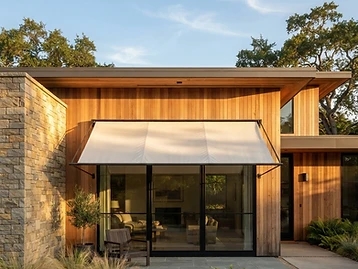
The visualization above shows a real awning shading an example window using actual solar geometry for the example location. The Summer Shade, Winter Sun, and View Retained numbers update live as you change the awning’s width, projection, angle, and mounting height — or your window’s size, facing direction, and location.
This is a real example, not a guess for your home. Enter your own measurements, direction, and location in the panel to see the ideal awning for your window.
First, measure your window
You'll need a few simple measurements before you begin. A tape measure and two minutes are all it takes.
- 1
Window width
Measure the outside width of the window opening, left to right.
- 2
Window height
Measure from the bottom of the window opening to the top.
- 3
Sill height
Measure from the ground to the bottom of the window.
- 4
Which direction does this window face?
Choose the direction the window faces. A best guess is fine.
Awning Creator Intro & How to Measure Your Window
How to Size a Window Awning
A well-sized window awning isn't simply the largest one that fits. The right design balances three things: how much summer sun it blocks, how much winter sun it lets through, and how much of your outward view it preserves. These four window awning dimensions drive that balance.
Overall awning width should extend beyond your window opening on both sides. That side overhang accounts for the fact that the sun rarely hits a wall dead-on — a wider awning keeps shading the glass as the sun moves across the sky. Projection is how far the awning reaches out from the wall. More projection shades more of the window at midday, but it also extends farther into walkways and patios. Angle is the slope of the awning surface. A steeper angle sheds rain and snow better and can shade more of a tall window, but it also blocks more of the sky. Mounting height — how far above the window opening the awning attaches — changes how low the awning can drop before it covers the glass.
Larger is not automatically better. An oversized awning may block winter sun you'd rather keep, and a deep projection can darken a room more than necessary. You can adjust each dimension and see the tradeoff immediately in the designer.
How Window Awnings Reduce Summer Heat
An exterior window awning blocks sunlight before it reaches the glass. That matters: once sunlight passes through a window, it warms the room and the interior surfaces, and that heat stays. Shading the glass from the outside keeps a meaningful portion of that energy out.
How much heat an awning blocks depends on your latitude, the direction the window faces, the sun's angle throughout the day and season, the awning's projection and angle, and how the awning is mounted relative to the top of the window. A south-facing window in a southern climate sees the sun high overhead at noon in summer, so a moderate projection can shade most of the glass. The same window in a northern state, or a window that faces east or west, sees the sun at a lower angle and may need a different combination of width, projection, and angle.
Awning Creator uses your location and window orientation to model the sun's path, so the awning shade calculator reflects your actual situation rather than a national average.
Summer Shade Without Losing Winter Sun
One of the most useful things a window awning can do is block the high summer sun while letting in the low winter sun. In summer the sun rides high across the sky, and a properly sized awning can shade the glass for most of the hottest hours. In winter the same sun travels a much lower arc — and if the awning is sized correctly, that lower winter sun passes underneath the awning and still reaches the window.
That's why Awning Creator shows Summer Shade and Winter Sun as separate numbers. An awning that maximizes summer shade may also cut into the winter warmth and daylight you want, so the tool lets you compare both at once and find a balance that suits your climate and priorities. Try the window awning calculator to see both numbers for your window.
How Much of My View Will an Awning Block?
Any awning that projects from the wall above a window will take up some of your view of the sky. How much depends on the projection, the angle, the mounting height, and how wide the awning extends. A deep, steeply angled awning mounted low can block a noticeable slice of the upper view; a shallower angle mounted higher may preserve more of it.
The awning design tool shows a View Retained number so you can weigh that tradeoff directly against the shade you gain. If preserving an open view matters more to you than maximum shade, you can choose a smaller projection or a gentler angle and watch the View Retained number go up.
How Awning Creator Calculates Your Design
The process is designed to take a few minutes:
- Enter your window width, height, and sill height.
- Enter your location so the tool can model the sun's path for your latitude.
- Enter the exact direction your window faces if you can — orientation has a large effect on which hours of the day the glass is exposed.
- Awning Creator evaluates the solar geometry for your window across the seasons.
- It recommends practical awning dimensions that balance shade, winter sun, and view.
- It compares Summer Shade, View Retained, and Winter Sun for the recommended design.
- You can adjust any dimension and immediately see how the numbers change.
You don't need to know the ideal dimensions in advance — the tool starts with a sensible recommendation and lets you refine it. Calculate your awning size to begin.
Window Awning Questions
What size awning do I need for my window?
The right size depends on your window dimensions, your location, and the direction the window faces. Awning Creator uses all three to recommend a starting size and then lets you adjust it. As a general guide, the awning should extend beyond the window on both sides and project far enough to shade the glass at midday without unnecessarily blocking winter sun.
How much wider should an awning be than the window?
Most residential window awnings extend several inches to a foot or more beyond the window on each side. That side overhang keeps shading the glass as the sun moves off-center. The exact amount depends on your window orientation and how much lateral sun you want to block.
How far should a window awning project?
Projection typically ranges from about two to four feet for standard residential windows. More projection shades more of the glass at midday but extends farther from the wall. Awning Creator shows you the shade tradeoff as you change the projection.
What's the best angle for a window awning?
An angle steep enough to shed rain and snow is a practical minimum. Beyond that, steeper angles shade taller windows more effectively but block more of the sky. Awning Creator lets you set a preferred angle or a range and shows the effect on shade and view.
Will a window awning block my view?
Any awning above a window will take up some of the upper view. How much depends on the projection, angle, and mounting height. Awning Creator's View Retained number helps you compare that tradeoff directly against the shade you gain.
Can an awning block summer sun but allow winter sun?
Yes. A properly sized awning can block the higher summer sun while letting the lower winter sun pass underneath. Awning Creator shows Summer Shade and Winter Sun separately so you can find a balance that works for your climate.
Does the direction my window faces matter?
It matters a great deal. A south-facing window receives the most direct midday sun, while east- and west-facing windows get strong low-angle sun in the morning or evening. Awning Creator uses your window's orientation to model when and how the glass is exposed.
Ready to see the numbers for your own window? Design your window awning — it takes a few minutes and there's nothing to install.
What you can do next
When your design is right, take it further with one of three paths — all built into Awning Creator.
Find commercially available awnings
Browse awning recommendations already sized for your window.
Download build-ready PDF plans
Get a specification sheet you can build from or hand to a fabricator.
Contact a local installer
Send your design to a participating local awning professional for a quote.